
The Future Is Already Being Built
How AI is turning infrastructure, work and trust into one shared test

The future rarely asks permission before it begins.
Introduction
Australia is not waiting for the AI future. It is already pouring concrete for it.
Shane Wright’s article on Australia’s accelerating AI and data-centre boom begins with the numbers behind that build-out, but its deeper value is what those numbers reveal: the social bargain around AI, who benefits, who is protected and who gets a say, is still catching up to the infrastructure.
The visible facts are already large: record spending, expanding infrastructure, rising energy demand and serious warnings about work, trust and social stability. The wider implication is that Australia now needs to ask who bears the costs, who captures the value and who gets a meaningful say.
That is the quiet problem. The country may not be choosing whether AI arrives. It may already be choosing the terms by default.
The useful question is no longer whether this future is simply good or bad. It is whether we are noticing enough, early enough, to shape it more fairly.
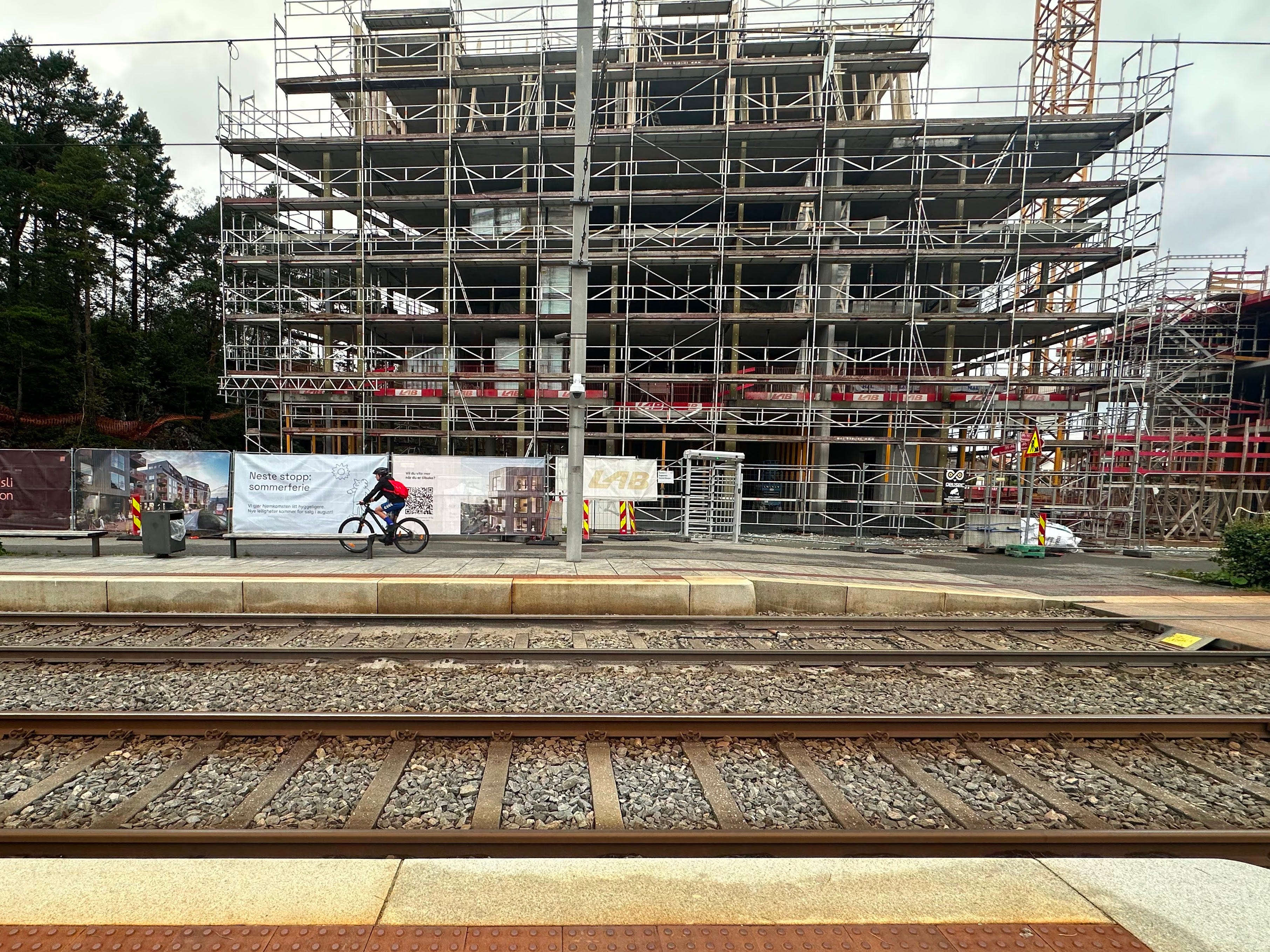
The Physical Future Behind the Digital One
What feels weightless still has foundations.
Artificial intelligence is often discussed as if it exists only in software, screens and distant systems. But its real-world footprint is already visible in land, buildings, electricity, water, construction and planning.
For a local community, AI may first appear not as a smarter assistant, but as a large building drawing power and water at the edge of town.
This is the first important shift in perspective:
The cloud has a location: Data centres sit in real places, near real communities, drawing on local resources and infrastructure.
The costs arrive locally: Noise, water use, energy demand and planning pressure may be felt by communities long before national productivity gains become visible.
The benefits may feel distant: If profits, platforms and decision-making sit elsewhere, local people may see the burden more clearly than the upside.
This is not a reason to reject the infrastructure. It is a reason to treat it honestly. A national technology strategy that ignores local experience will struggle to earn public trust.
That leads to the next question: what counts as success when spending is easy to measure, but public benefit is harder to prove?
When Spending Arrives Before Proof
A boom is not the same thing as a settlement.
Large investment can create confidence. It can also create a sense of inevitability. But spending on infrastructure is not the same as proving that the broader public will benefit.
The distinction matters because the timing is uneven:
Investment is immediate: Construction, equipment purchases and energy projects show up quickly in economic data.
Productivity is slower to prove: Better services, stronger wages, faster housing, improved healthcare and higher living standards need time and evidence.
Distribution is the real test: A richer economy is not necessarily a fairer one if the gains flow narrowly and the risks spread widely.
This is where the analysis moves from what is explicit to what is implied. The explicit story is the scale of investment. The implied question is whether this investment becomes shared value or concentrated advantage.
That question becomes sharper when we look at work, because people will judge this transition not only by national figures, but by what happens to their security, status and prospects.
The Work Question Is Bigger Than Jobs
People do not only lose income when work changes. They can lose standing, direction and confidence.
The common fear is unemployment. That fear is real, but it may not be the only or even the first labour-market effect to watch.
For a young lawyer, designer, analyst or graduate worker, AI may first appear not as national productivity, but as the disappearance of the junior tasks that once taught the craft.
The deeper changes may be quieter:
Some roles may be hollowed out: The job title may remain while judgement, training and autonomy are gradually removed.
Entry-level pathways may weaken: If junior tasks are automated, young people may lose the stepping stones through which professional skill is built.
Bargaining power may shift: Even where jobs remain, workers may have less leverage if employers believe technology can replace, monitor or downgrade their contribution.
This is where a practical social bargain matters. Workers need more than reassurance that new jobs may eventually appear. They need visible pathways into those jobs, protections against avoidable harm and a clear sense that productivity gains will not come only from reducing their value.
The same principle applies to communities. People are more likely to accept disruption when they can see where they stand within it.
Consent Cannot Be Retrofitted
People are more likely to accept change when they can see where they stand within it.
Major infrastructure needs legitimacy. That legitimacy cannot be assumed just because the economic case is strong.
The risk is not simply that AI moves quickly. It is that capital, infrastructure and corporate strategy may move faster than consent, regulation and public imagination.
A more durable approach would notice three things early:
Communities need more than consultation: They need clear information, enforceable protections and visible local benefit, especially around water, energy, noise and planning.
Workers need transition before displacement: Support is more credible when it arrives before livelihoods are damaged, not after.
The public needs evidence of shared gain: Trust grows when people can see that productivity is connected to wages, services, tax revenue and public value.
This is not an argument for slowing every innovation. It is about avoiding a future where the gains are presented as national, while the costs are experienced as local and personal.
That brings us to a deeper strategic issue: whether Australia is merely hosting the system, or shaping it.
Hosting Is Not Shaping
Hosting the system is not the same as shaping it.
There is a difference between supplying land and power to a global system and owning meaningful parts of the value chain. Data centres may make a country more important to the digital economy, but they do not automatically make it more powerful within that economy.
The strategic distinction is worth making clearly:
Infrastructure is only one layer: The highest value may sit in chips, models, platforms, data, cloud services and intellectual property.
Sovereignty requires capability: Skills, research, trusted public systems and domestic expertise matter if Australia wants more than a hosting role.
Trust is part of capability: A society also needs reliable information, strong institutions and ways to verify what is real.
This is where the issue moves beyond economics. If synthetic content weakens public confidence, then journalism, courts, schools, election bodies, regulators and public services become part of the infrastructure needed to govern the transition.
Markets can build tools and facilities. They cannot, by themselves, maintain the shared public conditions needed to use those tools wisely.
The final question, then, is not whether the future can be predicted perfectly. It is whether we are measuring the right things as it unfolds.
What We Should Be Measuring Now
The point of foresight is not certainty. It is preparation with humility.
The strongest signal is that the future is arriving in layers. Infrastructure, work, energy, truth, ownership and public consent are not separate issues. They are part of the same transition.
A better public dashboard would look beyond investment alone:
Measure the human effects: Track wages, job quality, entry-level roles, retraining outcomes and whether workers are gaining or losing bargaining power.
Measure the physical costs: Track water use, energy demand, local impact, grid pressure, land use and whether communities are receiving visible benefit.
Measure the civic strain: Track tax paid, public trust, misinformation, institutional readiness and whether people can still tell what is real enough to act on.
This is the practical middle ground between panic and passive optimism. It does not assume that technology will automatically harm society. It also does not assume that investment alone will deliver fairness.
The better question is more grounded: what would make this transition worth having?
Conclusion
Wright’s article matters because it shows a timing problem hiding inside an investment boom. The future is being built before the shared public understanding around it has been properly formed.
That does not call for panic, and it does not justify passive optimism. It calls for better questions, asked earlier. Who bears the local costs? Who captures the value? What happens to entry-level work? How much energy and water will this demand? What institutions will help us tell the real from the synthetic?
The signal here is clear enough to work with. If artificial intelligence is becoming infrastructure, then fairness, trust and participation must become infrastructure too. Not as slogans, but as ordinary conditions that help people see themselves in the future being built around them.
The future is not only something that happens to us. It is also something we notice, question and shape together.